Toy Story
Comprehensive Storyform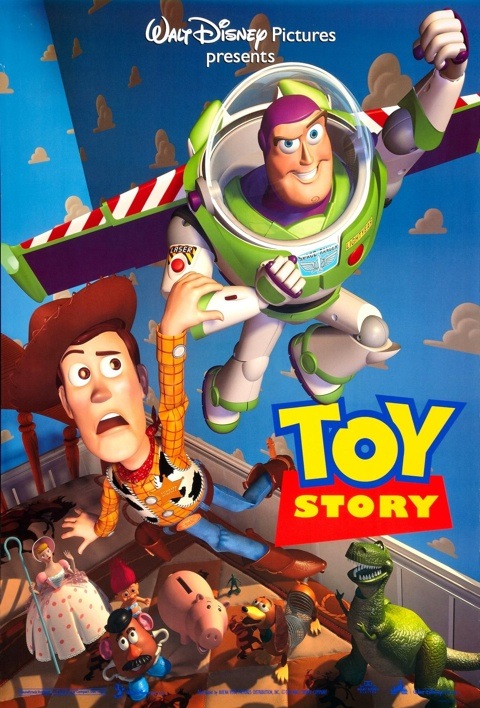
The following analysis reveals a comprehensive look at the Storyform for Toy Story. Unlike most of the analysis found here—which simply lists the unique individual story appreciations—this in-depth study details the actual encoding for each structural item. This also means it has been incorporated into the Dramatica Story Expert application itself as an easily referenced contextual example.
Story Dynamics
8 of the 12 essential questions
- Change
- Main Character Resolve
Woody’s resolve to maintain his status as “Andy’s Favorite Toy” is unraveled throughout the course of the story, until by the end he concedes that status to Buzz. At the moment of greatest crisis (right before the rocket explodes), Woody lets someone else be in charge for once, allowing himself to be literally taken under Buzz’s wings. From the experience of his separation from Andy, Woody comes to believe his own words, “It doesn’t matter how much we’re played with—what matters is that we’re here for Andy when he needs us.” In the final scene we see Woody loosened up and dancing, satisfied to be part of the group rather than its leader; he’s more comfortable with himself, more chummy to Buzz, and more accessible to Bo Peep’s advances.
A NOTE ABOUT OBSTACLE CHARACTER: Even though Buzz Lightyear appears to make a change (when he comes to see himself as Andy’s Toy rather than a Space Ranger), in terms of his IMPACT upon Woody and the others, he is a Steadfast Obstacle Character. His presence forces Woody to confront his personal issues, and that impact remains constant until Woody’s own “change” resolves the inequity between them. [Please see the “Story Comments” field for more info.] - Stop
- Main Character Growth
Woody needs to stop feeling entitled to sole possession of the “spot” on Andy’s bed. He needs to stop being insecure, competitive, and jealous. He needs to stop measuring himself in terms of “playtime.” If he would stop all these things, he could relax and accept a new state of affairs which is out of his control anyway.
- Do-er
- Main Character Approach
Woody is a very active, take-charge kind of cowboy. He calls meetings, plots strategies, mobilizes other toys, and approaches all problems by jumping into the fray, even if it means starting an unpleasant confrontation. He is loath to check his attitudes at the door, and that often gets him in trouble.
- Male
- Main Character Mental Sex
Woody is almost entirely focused on the effects he wants to achieve and how to directly cause them; “balance,” “surplus,” and “deficiency” rarely enter his considerations. His very linear approach is most dramatically demonstrated when he thinks, “Hmm, if I cause Buzz to disappear behind the desk, Andy will have to pick me to go to Pizza Planet, and I’ll win his favor back.” He then attempts a very simple cause-and-effect operation to use RC Car to push Buzz off the desk, but fails to see the relationships among the objects on the desk that will make his plan go awry. He also fails to consider how his actions will tip the delicate balance of public opinion against him. Later, however, when he pulls the mutant toys together and lays out a very linear, step-by-step strategy to save Buzz from Sid, his Male approach is very effective.
- Action
- Story Driver
All the precipitous events of the story are things that “happen” which force the characters to deliberate on how they should respond—Andy’s birthday party occurs early, Buzz Lightyear “lands” on Andy’s bed, the decorative motif of Andy’s room changes (note the lyrics of the song “STRANGE THINGS ARE HAPPENING TO ME”), Buzz is thrown out the window by accident, Sid pulls Buzz and Woody out of the claw machine, “moving day” arrives, etc. (The mother’s “decision” to move is not part of the movie, nor is her “decision” to buy the Buzz Lightyear toy.) The final “action” that resolves the Objective Story is the sudden appearance of Buzz and Woody next to Andy in the car.
- Optionlock
- Story Limit
There is not a specific time limit forcing the story to a conclusion; there is, however, a “race” between Woody and the moving van (figuratively and literally). One way of discerning an Optionlock story is the problem gets bigger as time passes, forcing the characters to consider their options more quickly. In Toy Story specifically, the looming problem is that the moving van is getting away while Woody’s options for reuniting with Andy are becoming increasingly slimmer. When RC Car’s batteries run out, Woody tries to light the rocket with the match. When the match fails, he uses Buzz’s helmet as a magnifying glass to light it. The rocket strategy almost doesn’t work either, but just as disaster seems imminent, Woody’s final option is to trust someone else to be in charge for once (when Buzz uses his wings to let them “fall with style” back to Andy), and that’s what finally results in success.
- Success
- Story Outcome
All of Andy’s toys are successfully reunited with Andy, before his family’s move to another house progresses too far out of reach.
- Good
- Story Judgment
Woody learns that he will still be loved even if someone else holds the rank of “Andy’s Favorite Toy.” No longer compelled to defend his perch as Room Leader, he’s more relaxed and easy-going, and more available for Bo Peep’s romantic overtures (notice how, at the end, Buzz is the one who acts nervous about the new presents). And finally, Woody has lost an enemy and gained a friend.
Overall Story Throughline
""Boy's Toys""
- Universe
- Overall Story Throughline
All concerns, problems, and considerations exist within a “universe” where toys come alive and interact when they are alone amongst themselves, forming a community and making lives for themselves within the context of the child’s room. The fixed situation is that the toys in Andy’s Room exist for no other purpose than to “be there for Andy.” Nothing is more profoundly problematic in this universe than the threat of separation from their child master. (The prospect of newer, possibly “better” toys makes the current ones fear ending up in the trash; while Buzz and Woody are separated from Andy, it is an inequity that must be corrected at all costs.) An aspect of this state of affairs is a sort of “code” that the toys live by very strictly (albeit voluntarily) that they must NEVER be seen animating in front of humans.
- Progress
- Overall Story Concern
Everyone is concerned with the progress of the Davis family’s impending move to another home, and how they are affected by it. “Has everyone picked a moving buddy?” “Already?!” “I don’t want any toys left behind. A moving buddy—if you don’t have one, GET one!” If the move progresses faster than the efforts of Woody and Buzz to reunite with Andy, they are doomed to be Lost Toys. At the gas station: “Sheriff, this is no time to panic.” “This is the perfect time to panic! I’m lost…Andy is gone—they’re going to move from their house in two days and it’s all your fault!” The toys have various other concerns regarding progress: Bo Peep is concerned with how her relationship with Woody is progressing; Rex is concerned with the progress of his “roar”; they even have a “Plastic Corrosion Awareness” meeting, indicating their concerns with age.
- Threat
- Overall Story Issue
All the toys are very clearly threatened by the prospect of being replaced by newer, bigger, “cooler” toys every birthday and Christmas. The perceived threats to their status and safety motivate virtually all their actions: they send out the soldiers to eavesdrop on the birthday party; Rex tries to improve his roar; Woody tries to negate Buzz every chance he gets; when Woody is tagged as a murderer, the others ostracize him in order to protect themselves; they pick “moving buddies”; etc.
- Security
- Overall Story Counterpoint
The toys miss the boat as to where their true security lies—in the love of their six-year-old master.
- Overall Story Thematic Conflict
Threat vs.SecurityHow accurate are the toys’ assessments of their vulnerabilities? “What if Andy gets another dinosaur? A mean one?” “No one’s getting replaced. This is Andy we’re talking about.” Should the toys prepare for the Threats and do everything they can to protect themselves? Or should they be Secure in the knowledge that Andy loves them? By the end of the story, Security proves to be the better value.
- Determination
- Overall Story Problem
The group of toys is riddled with anxiety every time a birthday or Christmas rolls around, because they have determined that the presence of new, “better” toys (“cause”) will result in their being “next month’s garage sale fodder” (“effect”). This determination causes them to put their efforts in all the wrong places, leading to conflicts, jealousies, panicked reactions, and other problems which upset the stability of their community. Also, the group’s determination that Woody knocked Buzz out the window on purpose, and therefore has gone over the edge in his jealousy, foils Woody’s efforts to restore equity in their Universe (Buzz wrestles Woody out of the car at the gas station; Potato Head drops the string of Christmas lights).
- Expectation
- Overall Story Solution
After the experience of the story proves that Andy is not going to give up any of his toys, the group actually comes to LOOK FORWARD to Christmas and the arrival of new presents. (Rex actually HOPES for a new dinosaur, and Potato Head gets his dreamed-for Mrs.) In other words, the prospect of new toys gives them the Expectation of better times ahead rather than a fate in the trashcan.
- Hunch
- Overall Story Symptom
The toys look at circumstantial evidence to draw their conclusions, using half-formed thoughts and impressions (they’re only toys, after all). Witness their reactions to the new birthday presents—the bigger the gift is, the more they panic. The circumstantial evidence that Woody pushed Buzz out the window with malice and intent causes the other toys to despise, distrust, and ostracize Woody. That evidence is furthered when Woody accidentally reveals Buzz’s severed arm from Sid’s room. In general, the toys focus on their Hunches as being their actual problems, not seeing their own process of determination as being faulty.
- Theory
- Overall Story Response
The toys’ hunches are so incomplete and bring them such fear, they are compelled to piece together the mechanisms at work, or at least what they THINK is at work, and extrapolate from there. They send out soldiers so they can eavesdrop on the party, on the theory that they’re somehow better off knowing NOW rather than later what those presents are. Potato Head responds to the hunch that Buzz was purposely pushed out the window by theorizing, “Couldn’t handle Buzz cuttin’ in on your playtime, could ya Woody? Didn’t want to face the fact that Buzz just might be Andy’s new favorite toy, so you got rid of him. Well, what if Andy starts playin’ with me more, Woody, huh? You gonna knock me outta the window, too?” Woody hopes to remedy their hunch that he’s turned into a murderous monster by bringing Buzz back alive, theorizing, “I’m saved! Andy’ll find you here, he’ll take us back to the room, and then you can tell everyone that this was all just a big mistake. Huh? ... Buddy?”
- Security
- Overall Story Catalyst
It’s the toys’ sense of Security—or rather, the lack of it—regarding their status in Andy’s Room that accelerates events. Plus, their need to safeguard themselves from destruction by Sid and the need to avoid permanent abandonment propels them to faster action. Also, Buzz’s insistence that “the security of this entire universe” is at stake keeps things rolling along (such as when he climbs into the Claw Machine, leading to his and Woody’s capture by Sid, which furthers the story on all levels).
- Worry
- Overall Story Inhibitor
What slows down the toys the most? The fact that anytime human eyes come around they have to stop everything and “drop.” Obviously they’re Worried about what will happen if they’re “caught” (presumably they abide by this voluntary “rule” because their purpose as toys is to enhance the child’s imagination and joy, and to animate in front of him would ruin their future with the child). Other examples of Worry as Inhibitor include: When Woody is at Sid’s window and solicits the assistance of the others across the way, they refuse to help because even Slinky and Bo Peep worry that Woody has really turned bad. Also, Woody is so worried that Sid’s Mutant Toys will “eat” him that he’s slow to realize they just want to help.
- Present
- Overall Story Benchmark
Being separated from Andy in the here and now is the immediate inequity in the Universe. How close or far away Woody and Buzz are to NOT being Lost Toys in the present moment is the benchmark of progress in the Objective Story.
- Overall Story Throughline Synopsis
The toys in Andy’s Room know they’ll be moving in a week, and they’re getting prepared for it. But they’re not prepared for Andy’s early birthday party, because they’re always afraid of being “replaced” with new arrivals. Buzz Lightyear is the new toy that threatens to replace Woody as Favorite Toy and Room Leader. Woody tries to retaliate against him, leading to a series of events that causes himself and Buzz to be lost out in the wild together. They end up in the possession of Sid, the infamous mutilator of toys who lives next door to Andy. Woody and Buzz must work together to escape Sid and return to Andy before the moving van can get away and leave them behind forever.
- Overall Story Backstory
For some reason that is not revealed, the Davis family is moving (could it have something to do with the absence of Andy’s father?). Even during this progress toward a new life at a new house, Andy is having a childhood which the mother obviously wants to stay attentive to; that’s why she buys him the neatest toys available. This has given a home to a wide range of cool toys, which have evolved into quite a tight little community in the world of Andy’s Room. But since the toys themselves have a rather child-like mentality, they fear abandonment and cannot handle the prospect of newcomers with much degree of maturity.
Additional Overall Story Information →
Main Character Throughline
Woody — Pull-string Cowboy
- Physics
- Main Character Throughline
Woody as a Physics character is illustrated in terms of both what he does and what is done upon him. As for the latter, the opening sequence of the film clearly shows how actively Woody is used by Andy as a plaything. It is the degree of this physical activity with which Woody defines his status and self-esteem. As far as the activities he himself initiates, Woody is very much a take-charge jump-into-the-fray kind of cowboy, calling meetings, plotting strategies, getting into fights, scaring the bejesus out of Sid, etc.
- Doing
- Main Character Concern
“Playing” (or being played with) is the “Doing” that Woody is concerned with; the measure of his “playtime” is the measure of his status. With less status, he is less able to run the room (which is another form of “Doing”—calling meetings, planning for the move, etc.).
- Experience
- Main Character Issue
Woody’s Experience of being Andy’s Favorite Toy “since Kindergarten” puts him on a perch as Top Gun of Andy’s Room. It’s this history that causes him to be sensitive to any issue with his status. As the story progresses, Woody gains enough Experience to realize that hanging on to the idea of “being number one” is not worth the trouble.
- Skill
- Main Character Counterpoint
Woody doesn’t really have any overt “skills” as a toy—not like Buzz. All he’s got is a pull-string, and “it sounds like a car ran over it.”
- Main Character Thematic Conflict
Experience vs.SkillWoody’s personal throughline explores the back-and-forth considerations of Experience vs. Skill. Will Woody’s experience of being Andy’s Favorite Toy win out over the superior gadgetry of Buzz Lightyear? Do “Skills” really matter? Does “Experience” really matter? Which is more important? By the end of the story, “Experience” seems to have greater value, but “Skills” have not ceased to be a factor.
- Determination
- Main Character Problem
Woody’s determination that things will (or should) always be exactly the way they’ve been is the source of his jealousy and insecurity. “In a couple of days everything will be just the way it was. They’ll see… I’m still Andy’s favorite toy.” His angst is heightened by his determination that, “What chance does a toy like me have against a Buzz Lightyear action figure? Why would Andy ever want to play with me, when he’s got you?” Even in smaller ways, his faulty determinations get him in trouble: “Safer in the cockpit than the cargo bay—what an idiot. AAAAHHHH-OHHHH!”
- Expectation
- Main Character Solution
When Woody drops his Expectation to always be Andy’s Favorite Toy, his angst is resolved. When he comes to Expect that having Buzz around is not really so bad, and when he comes to Expect that Andy will always have a special place for him, he’s able to relax and be happy.
- Non-Accurate
- Main Character Symptom
Woody sees all his problems residing in the inaccurate perceptions of the other toys. “It’s not a laser! It’s a little lightbulb that blinks!” “That wasn’t flying! That was falling with style!” “YOU-ARE-A-TOYYYY!!! You aren’t the real Buzz Lightyear, you’re an action figure! You are a child’s plaything!”
- Accurate
- Main Character Response
Woody constantly tries to set the other toys straight, to provide them with more accurate understandings. “What did I tell you earlier? No one is getting replaced.” “Over in that house is a kid who thinks you are the greatest, and it’s not because you’re a Space Ranger, pal, it’s because you’re a TOY! You are HIS toy.”
- Skill
- Main Character Unique Ability
Woody may not have the gadgets that Buzz has, but he has tremendous leadership skills—he knows how to plan strategies, mobilize other toys, motivate others, and put himself at risk fearlessly to accomplish a purpose…when he’s not undermined by jealousy and insecurity. “I think I know what to do. We’re going to have to break a few rules, but if it works, it’ll help everybody.”
- Desire
- Main Character Critical Flaw
Woody’s Desire to bring Buzz down so he can stay on top undermines his considerable Skills as a leader. This Desire makes him screw up, and it causes the other toys to distrust him, which foils all his strategies. When he drops this Desire, he stops negating Buzz and even encourages him; he’s also able to motivate and mobilize Sid’s mutant toys: “Listen, please! There’s a good toy down there and he’s going to be blown to bits in a few minutes all because of me. I’ve gotta save him—but I need your help.”
- Learning
- Main Character Benchmark
Woody learns “You’ve Got a Friend in Me”—that is, he learns how to regard Buzz as a friend rather than a competitor, and also learns that Andy still loves him and needs him even if he doesn’t spend as much time playing with him (which is his concern of “Doing”).
- Main Character Description
Woody is Main Character and Protagonist; he also fulfills the Reason archetype. He is the one who Pursues the goal of reuniting with Andy, although his drive to do so is initially misguided (a faulty means of evaluation involving Determination). He Considers the pros and cons of taking Buzz back with him; he’s motivated to apply Logic (strategies, etc.) to his actions, and to try to keep Control over the group and the situation.
- Main Character Throughline Synopsis
Woody, a simple pull-string cowboy doll, enjoys the status of Andy’s Favorite Toy and Room Leader until the arrival of an ultra-cool, gadget-laden Space-Age toy threatens his entire world.
- Main Character Backstory
Since Kindergarten, Woody has been Andy’s Favorite Toy. Andy has played with Woody the most, wears a hat like Woody, and decorates his room like the Old West. This has given Woody a cocky assurance that makes him feel entitled to be Room Leader and to be sole inhabitant for all times of the special “spot” on Andy’s bed. He never counted on the possibility that Andy’s tastes might change, and therefore his status as Top Gun would vanish, so he wasn’t prepared for the arrival of a newer, neater, more “heroic” toy than himself.
Additional Main Character Information →
Influence Character Throughline
Buzz Lightyear — New, Cooler Toy
- Psychology
- Influence Character Throughline
Buzz Lightyear represents Psychology both in terms of his own internal manner of thinking, and how he impacts the psychology of those around him. Internally, Buzz overly identifies himself with his plastic persona and has great difficulty thinking of himself as a child’s plaything. Externally, Buzz’s presence creates adoration, jealousy, and divisiveness among the group (e.g., “Laser-envy”). Oddly, he follows the “rules” of being a toy (going inanimate in the presence of humans) but refuses to believe he’s a toy; he takes so much delight in showing off and feeling important that he won’t let go of his more glamorous Space Ranger identity, even though it’s false and ultimately unworkable. While he easily manipulates others with his charisma, he is also easily manipulated—like when Woody spots the Pizza Planet delivery truck: “Buzz…I found a spaceship!” “Now you’re sure this space freighter will return to its port of origin once it jettisons its food supply?” “Uh-huh. And when we get there, we’ll be able to find a way to transport you…home.” “Well, then, let’s climb aboard.”
- Being
- Influence Character Concern
“Being” a Space Ranger vs. being a toy is the concern that dominates Buzz’s interests and behavior. He goes to great lengths to fulfill the role of a charismatic hero on a mission to save the galaxy. But he also relishes the opportunity to (temporarily) adopt the lifestyle of the room. “It looks as though I’ve been accepted into your culture. Your Chief, Andy, inscribed his name on me. Well, I must get back to repairing my ship.” But when “being” a Space Ranger proves to be out of the question, he approaches “being” a toy with all the heroic bravura he can muster.
- Desire
- Influence Character Issue
Buzz sends out waves of Desire, both positive and negative, wherever he goes. Obviously he’s a real hit with the boys at the birthday party. Then when he impresses the other toys with his abilities, they respond, “Man, the dolls must really go for you. Can you teach me that?” His growing popularity with Andy and the other toys causes Woody to greatly desire his undoing. Later, though, even Woody admits, “Why would Andy want you?! Look at you—you’re a BUZZ LIGHTYEAR. Any other toy would give up his moving parts just to be you. You’ve got wings, you glow in the dark, you talk, your helmet does that—that WHOOSH thing—You are a COOL toy!”
- Ability
- Influence Character Counterpoint
Buzz’s superior abilities casts an inferior light on Woody’s own abilities as a toy. “As a matter of fact, you’re too cool. I mean—what chance does a toy like me have against a Buzz Lightyear action figure? All I can do is…” (pulls string on voice box: “There’s a snake in my boots!”) “Why would Andy ever want to play with me, when he’s got you?”
- Influence Character Thematic Conflict
Desire vs.AbilityDoes the ability to flash lights, pop out wings, and karate-chop make a toy more desirable? Buzz’s presence forces this issue. While the answer ultimately is yes, Andy’s desire to have Buzz with him in bed and decorate his room in Space Age motif does not translate into a desire to throw away his other toys.
- Unending
- Influence Character Problem
Somehow Buzz landed in Andy’s Room carrying the notion that he’s really “the” Buzz Lightyear, always has been and always will be. This delusion, and the fact that he just won’t cut it out, is problematic both to himself and in terms of his impact. It leads him to be overconfident in himself, and oblivious to how he’s upsetting the stability of Andy’s Room. The belief that he’s on an Unending quest to protect the galaxy from the Evil Emperor Zurg causes him to be angry at Woody, and unconcerned about his separation from Andy; it motivates him to climb into the Claw Machine, which results in his and Woody’s capture by Sid; it drives him to try to fly out of Sid’s house, which results in a broken arm; etc.
- Ending
- Influence Character Solution
When Buzz sees the TV commercial, and then learns he can’t really fly, it puts an End to his delusion that he always has been and always will be “the” Buzz Lightyear. While he has trouble coping with that knowledge at first, he eventually comes to terms with it, and his drive to leave Andy’s Room and to fight with Woody is dispelled. He then turns his energies to the more appropriate task of putting an End to the state of affairs where Andy is not in possession of all his beloved toys. Doing so truly makes him one of the gang, and his personal inequity (the disparity between who he is and who he thinks he is) is resolved.
- Hunch
- Influence Character Symptom
Buzz focuses on his Hunches as to how he arrived in this place and how he must react: “Mission log… My ship has run off course en route to Sector 12. I’ve crashed-landed on a strange planet; the impact must have awoken me from hypersleep. Terrain seems a bit unstable… No read-out yet if the air is breathable…” The “circumstantial evidence” that he bases his conclusions on are his own gadgetry, his “spaceship,” and his persona. He looks, talks, and glows like Buzz Lightyear, so he must BE Buzz Lightyear, right?
- Theory
- Influence Character Response
When Buzz is confronted with the premise that he’s really a toy, he adamantly dispels any such theories, responding instead by bouncing around the room to “prove” he can fly, attempting to fix his spaceship, asserting that he alone has information that can destroy Emperor Zurg’s Death Star—basically countering real theories with fictional ones. “YOU-ARE-A-TOYYY!!! You aren’t the real Buzz Lightyear, you’re an action figure!! You are a child’s plaything!!” “You are a sad, strange little man, and you have my pity. Farewell (Vulcan salute).” When Buzz encounters the TV commercial exposing his true nature, he still has a hunch he’s the real thing—and in response, he tries to prove his theory that his wings will save him…upon which he falls from grace. But not permanently—his wing theory ultimately proves to be valid.
- Ability
- Influence Character Unique Ability
When Buzz uses his special Abilities (heroic attitude, wings, etc.) to help reunite with Andy, rather than get away, he is able to move forward in his positive impact on Woody (i.e., they become teammates and friends).
- Experience
- Influence Character Critical Flaw
Buzz’s lack of Experience knowing himself as a toy undermines his credibility, particularly with Woody. Even with the other toys, he almost blows it: “Where are you from? Singapore? Hong Kong?” “Well, no, actually I’m stationed up in the Gamma Quadrant of Sector Four… (blah blah blah blah…)” “Oh, really? I’m from Playskool.” “And I’m from Mattel…” It is only when he sees the TV commercial, takes a fall after attempting to fly, and hears Woody’s speech about how cool it is to be a toy, that this Lack of Experience gets out of the way and allows his unique abilities to constructively come forth.
- Conceiving
- Influence Character Benchmark
Buzz’s arriving at ideas of what he must do and how he must apply himself is the standard against which his concern of Being is measured. In other words, he starts out with the idea that he must leave Andy’s Room and rendezvous with Star Command, and he puts all his energies into “being” a Space Ranger. But when that idea proves to be invalid, his conception about his “Being” gets thrown into a tizzy. “One minute you’re defending the whole galaxy, and suddenly you find yourself suckin’ down Darjeeling with Marie Antoinette and her little sisters… Don’t you get it?! You see the hat? I am Mrs. Nesbit!!” Finally, when he Conceives that, “There’s a kid over in that house who needs us,” he applies all his “Buzzness” to the task of Being Andy’s Toy.
- Influence Character Description
Buzz is the Obstacle Character subjectively, and a Complex Character objectively. He represents Temptation in that, not only does he succumb to the temptation to believe his own bull (and try to leave the child who loves him), but his presence causes others to be tempted to do things and think things they normally wouldn’t. He also partially represents the Antagonist to Woody’s Protagonist—he causes Andy to Reconsider who his favorite toy is; when Woody messes with Buzz in any way, he directly confronts Woody to Reconsider his actions and attitudes. Later, though, he is forced to Reconsider his own actions, attitudes, and identity. (“Avoid,” the other half of Antagonist, is primarily represented by Sid.)
- Influence Character Throughline Synopsis
Buzz is an ultra-cool, gadget-laden Space-Age toy who doesn’t realize he’s a toy. His confidence and charisma make him instantly popular with the kids and the other toys, but the impact of this popularity—and his refusal to see the situation for what it is—upsets the stability of the community of Andy’s Room.
- Influence Character Backstory
Buzz was created with the persona of a Space Ranger, and was sort of “activated” with that identity. Somewhere along the line someone forgot to program him with a self-awareness filter to let him know he’s really a child’s toy. (Apparently all the other toys have that filter—they even know what companies made them and in what countries.)
More Influence Character Information →
Relationship Story Throughline
""You've Got a Friend in Me""
- Mind
- Relationship Story Throughline
Woody and Buzz clash over their respective fixed mindsets—Woody, that Buzz has invaded his exclusive territory, and Buzz, that he’s a Space Ranger on a crucial mission, not a toy. “Look, we’re all very impressed with Andy’s new toy…” “Toy?” “T-O-Y. Toy.” “Excuse me, I think the word you’re searching for is ‘Space Ranger’.” “The word I’m searching for, I can’t say, because there are preschool toys present.” (Potato Head: “Gettin’ kinda tense, aren’t ya?”) Later: “Listen, Lightsnack, you stay away from Andy. He’s mine, and no one is taking him away from me.” “What are you talking about? Where’s that bonding strip?!”
They also conflict because they each hold the fixed attitude that their problems are caused by the other. “I’m lost, Andy is gone—they’re going to move from their house in two days and it’s all your fault!!” “My fault?! If you hadn’t pushed me out of the window in the first place…” “Oh, yeah? Well, if YOU hadn’t shown up in your stupid little cardboard spaceship and taken away everything that was important to me…” “Don’t talk to me about importance. Because of YOU the security of this entire universe is in jeopardy.” “WHAT?!!” “You, my friend, are responsible for delaying my rendezvous with Star Command.” “YOU-ARE-A-TOYYYY!!!” - Preconscious
- Relationship Story Concern
Woody and Buzz butt heads in the realm of Preconscious concerns: Buzz’s reflexive nature to think he’s a “real” Space Ranger, and Woody’s knee-jerk reaction to him. “Hey guys, look! It’s the REAL Buzz Lightyear!” “You’re mocking me, aren’t you?” “Oh, no, no… Buzz, look! An alien!” “WHERE?” “Ah, ha, ha, ha, ha!” Woody is always manipulating Buzz’s reflex to act like a hero: “Buzz, Buzz Lightyear! We’ve got trouble!” “Trouble?! Where?!” “Down there… A helpless toy…it’s trapped, Buzz!” “Then we’ve no time to lose!!” Their relationship can only turn positive when they apply their innate natures toward cooperating rather than competing.
- Worry
- Relationship Story Issue
What and how much to Worry about is constantly an issue between Woody and Buzz. After Buzz shows up and shows off, Woody feigns that he’s not at all worried: “In a couple of days, everything will be just the way it was. They’ll see… I’m still Andy’s favorite toy.” Later, they butt heads because Buzz is only “worried” about the safety of the galaxy, while Woody is more appropriately worried about being lost and/or destroyed. After they’ve both grown, they share the same worry about Andy being without his most beloved toys: “C’mon, Sheriff. There’s a kid over in that house who needs us.” Even at the end of the movie, Worry is an issue between them: “Buzz. Buzz Lightyear. You are not worried, are you?” “Me? No, no, no, no… Are you?”
- Confidence
- Relationship Story Counterpoint
Woody tries very hard to be Confident in the face of a changing tide, but doesn’t do very well (Bo Peep: “Don’t let it get to you, Woody.” “Uh, let what? I don’t—uh, what do you mean? Who?”). Buzz’s unrelenting Confidence in himself and his “spaceman thing” is an aggravation point between them, but sometimes his confidence proves to be misplaced, and sometimes not. When the two choose to work together, they’re able to develop a much more legitimate and workable sense of Confidence in themselves and each other.
- Relationship Story Thematic Conflict
Worry vs.ConfidenceIs it better to prepare for the worst or expect the best? Often it seems that Buzz’s misplaced Confidence is undermining their efforts; it would behoove him to Worry a bit more (about “dying” or becoming a “lost toy”). On the other hand, Woody’s Worry often causes him to make careless moves; a little more Confidence would make him more clear-headed. Ultimately, the story proves that what truly wins out is the brand of Confidence wrought from cooperation and teamwork, rather than from solo effort.
- Test
- Relationship Story Problem
Woody and Buzz feel compelled to constantly test the validity of each other’s claims and attitudes: “He can’t fly!” “Yes, I can.” “You can’t!” “Can!” “Can’t! Can’t! Can’t!” “I tell you, I could fly around this room with my eyes closed!” “Okay then, Mr. Litebeer, PROVE it!” “All right then, I will!” (Later…) “That wasn’t flying! That was…falling with style!” After Sid blows up Combat Carl: “I could have stopped him.” “Buzz, I would LOVE to see you try.”
They’re also constantly testing each other’s limits: “And another thing—stop with this spaceman thing! It’s getting on my nerves.” “Are you saying you want to lodge a complaint with Star Command?” “Oh okay, so you want to do it the hard way, huh?” “Don’t even think about it, cowboy.” “Oh, yeah, tough guy?!” - Trust
- Relationship Story Solution
When the two rivals finally trust each other and cooperate, they’re able to get out of their predicament. “Hey, Buzz!! You’re flying!!” “This isn’t flying. This is falling—with style!” “Ha ha!! To Infinity and Beyond!!”
- Hunch
- Relationship Story Symptom
Like all the toys in the story, Woody and Buzz draw their conclusions about each other and themselves from first impressions and half-formed thoughts. Woody’s “hunch” is that Buzz is “stealing” Andy from him. Buzz’s “hunch” is that he’s a real hero with serious weaponry, and that Woody is a “sad strange little man” with an attitude problem. Based on these hunches, they focus on how their problems are caused by the other.
- Theory
- Relationship Story Response
Woody and Buzz respond to each other with competing theories as to how Buzz got there and what his purpose is, and how “real” his abilities and gadgetry are. “These are plastic—he can’t fly!” “They are a terillium-carbonic alloy and I CAN fly.”
- Confidence
- Relationship Story Catalyst
Acts and attitudes of Confidence keep propelling Buzz and Woody’s relationship into new levels, both negative and positive. Buzz’s confident display of “flying” becomes a serious bone of contention between them. Woody’s confidence that he can steal back Andy’s affections by hook or by crook leads to Buzz’s expulsion from the window and greater conflict between them. Buzz’s confidence in his Space Ranger persona not only aggravates Woody to no end, but it leads to their ultimate capture by Sid, which thrusts their relationship into greater intensity. Their relationship starts turning positive when Woody tries to re-instill confidence in Buzz by reminding him that he’s a really cool toy, which is much better than being a Space Ranger. Buzz then reciprocates, and as the two learn to like and trust each other, they start having confidence in their ability to work as a team.
- Threat
- Relationship Story Inhibitor
Every time Woody and Buzz’s conflict is accelerating, some form of Threat enters the picture that slams on the brakes. While they’re going at it in Andy’s room, suddenly Sid’s evil activities next door divert them away from their confrontation. While they’re fighting at the gas station, they’re interrupted when Andy’s car drives away (representing the threat of separation). When Woody is about to attack Buzz again, a huge tanker truck drives up, nearly crushing Woody. Inside Sid’s house, the threat of just being there keeps attention off their conflict and on the effort to just flee. Were it not for the accelerating influence of Confidence, Threat would keep Buzz and Woody from developing and ultimately resolving their relationship.
- Conscious
- Relationship Story Benchmark
The degree to which Woody and Buzz consider each other in a positive manner is the benchmark of growth between them. “I’ve gotta save him! He’s my friend. He’s the only one I’ve got.” Also, the degree to which they “think clearly” is a measure of their growth. “No, Woody, for the first time I AM thinking clearly. You were right all along. I’m not a Space Ranger. I’m just a toy. A stupid little insignificant toy.” “Whoa, hey—wait a minute. Being a toy is a lot better than being a Space Ranger.”
- Relationship Story Throughline Synopsis
The heart of the story deals with how wonderful it is to be a child’s toy, even if you’re not number-one.
- Relationship Story Backstory
Woody and Buzz each have a background of being a top selling, highly popular children’s toy. (In Buzz’s case, he believes he’s a popular space ranger.) Their respective egos are bound to clash when they first come into contact with each other.
Additional Relationship Story Information →
Additional Story Points
Key Structural Appreciations
- Progress
- Overall Story Goal
The toys must be properly prepared for the family’s move to another home. If their preparations (and efforts to reunite) don’t progress as fast or faster than the move itself, they will be left behind.
- Preconscious
- Overall Story Consequence
The toys—who only live and “think” by some form of magic—operate primarily from their instinctual base of reactions and attitudes. Their most basic, essential nature is that they exist to Be Andy’s Toy. To fail in keeping up with the progress of the move dooms them to be Lost Toys. That is an existence they are inherently unsuited and unconditioned for, and they are reflexively afraid of it. “This is the PERFECT time to panic!”
- Being
- Overall Story Cost
Woody’s natural state is to be Andy’s plaything. In order to resolve the inequity (i.e., reunite himself and Buzz with Andy), Woody must “be” more than just a plaything—he must actually “be” the cowboy-hero of his pull-string persona out in the wild. Conversely (and perhaps ironically), Buzz pays the price of needing to STOP playing the role of a “real” space ranger on a mission. In neither case do they have to permanently “become” anything than what they already are.
- Doing
- Overall Story Dividend
One of the benefits derived from Woody’s quest to restore the status quo is that he successfully scares Sid out of mutilating and destroying toys ever again. (In other words, he STOPS an ongoing physical activity.) Also, Woody’s planning and execution of the scheme against Sid instills within him renewed confidence and vigor.
- Present
- Overall Story Requirements
Woody and Buzz must get back into Andy’s possession NOW if they are to be part of the move. In other words, equity must be restored in the Present if Progress is to continue with full Success.
- Conscious
- Overall Story Prerequisites
All the toys need to change their considerations before they can be reunited. Woody needs to consider Buzz as his friend and compatriot rather than his enemy; Buzz needs to consider himself a toy rather than a Space Ranger; the other toys need to consider Woody innocent of malice toward Buzz so they’ll be prone to help (“Guys! Woody’s riding RC! And Buzz is with him!” “It IS Buzz! Woody was telling the truth!” “What have we done?!” “Great. Now I have guilt.”).
- Conceiving
- Overall Story Preconditions
Woody can’t fulfill the requirement of getting himself and Buzz back to Andy without coming up with some new, unique ideas (simply “running” never works). He conceives the idea to use Buzz’s delusions against him, by claiming to have found a “spaceship.” To escape Sid’s house, he gets the idea to use a string of Christmas lights as a rope to Andy’s room, but fails in his conceptualizing of the idea (i.e., he doesn’t get the other toys’ cooperation). He later conceives the idea to “break the rules” and scare the daylights out of Sid (the implementation of which does work).
- Learning
- Overall Story Forewarnings
Woody and Buzz learn just how bad life can be outside of Andy’s Room—namely, they learn that they can be crushed by a car, blown up by an evil boy, or eaten by an evil dog.
Plot Progression
Dynamic Act Appreciations
Overall Story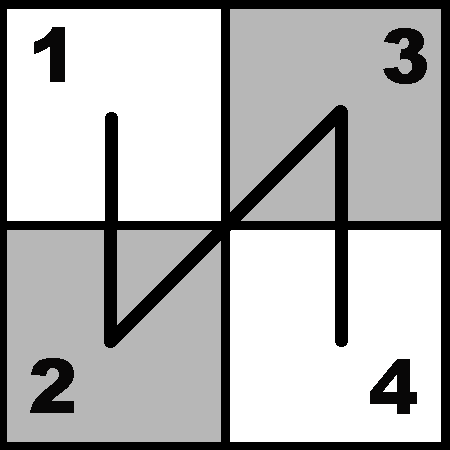
- Past
- Overall Story Signpost 1
The story opens showing Woody—the 19th-century-style cowboy—dominating the Universe of Andy’s Room, which has been the state of affairs “since Kindergarten.”
- Overall Story Journey 1 from Past to Future
The toys are concerned with how the birthday party and the arrival of new presents will cause a shift in their universe from “how things have been” to “how they are going to be.” The arrival of Buzz Lightyear then accelerates this concern, as he appears to represent the future state of affairs in Andy’s room.
It’s an interesting metaphor that Woody’s persona as a Wild West Cowboy illustrates “The Past,” and Buzz’s Space-Age persona represents “The Future.” - Future
- Overall Story Signpost 2
The first act break essentially occurs when Andy changes his room from a Wild West motif to a Space Age motif, and Buzz gets Andy’s name inscribed on the bottom of his shoe. The political hierarchy of Andy’s room has now entered “The Future.”
- Overall Story Journey 2 from Future to Progress
Woody’s plan to subvert the room’s obvious future goes awry, sending Buzz out the window. At that point, concerns over the room’s future pecking order become less important, and concerns over just getting all the toys back together before the family moves become paramount. (This section represents the largest part of the film—“Act 2,” so to speak.)
- Progress
- Overall Story Signpost 3
The arrival of “moving day,” and the departure of the moving van, essentially mark the next act break. This is when the family’s move starts rapidly progressing, and Woody’s efforts to reunite himself and Buzz with the other toys must accelerate.
- Overall Story Journey 3 from Progress to Present
Woody and Buzz are concerned with progressing in their efforts to reunite with the others faster than the moving van can progress down the street. The effectiveness of their efforts will determine whether they will end up as Lost Toys, and nothing is more devastating in the Present moment than being a Lost Toy (or a destroyed one).
- Present
- Overall Story Signpost 4
Reuniting with Andy—that is, Being There For Andy in the here and now—finally restores equity in the Universe.
Main Character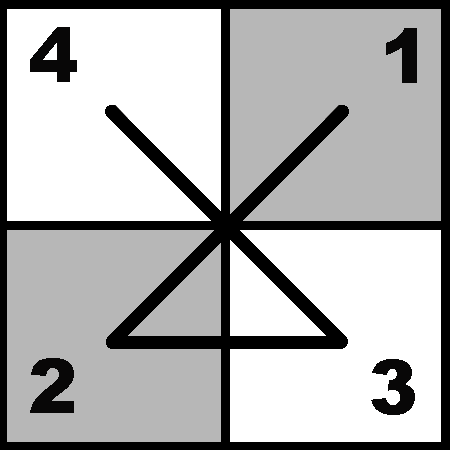
- Doing
- Main Character Signpost 1
“Playing” or “Being Played With” is the “Doing” illustrated by Woody in the opening title sequence. This segues into showing how Woody’s life is all about Doing: playing checkers with Slinky, practicing his “draw” with Etch, calling meetings, etc. As a thematic illustration of his concern of Doing, during the room meeting in Act 1, Woody tells the other toys, “It doesn’t matter how much we’re played with”—which is easy for him to say as long as he’s the one MOST played with.
- Main Character Journey 1 from Doing to Obtaining
The first dynamic act shifts Woody’s concern from a life of carefree Doing to the prospect of Losing (the antithesis of Obtaining) his status as Andy’s Favorite Toy and Room Leader, upon the mid-act arrival of Buzz.
- Obtaining
- Main Character Signpost 2
The OPPOSITE of Obtaining, “Losing,” marks the act break as the musical montage makes clear how much Woody has lost. The lyrics of “Strange Things are Happening to Me” illustrate this nicely: “I had friends, lots of friends, now all my friends are gone. And I’m doin’ the best I can to carry on. I had power; I was respected; but not anymore. And I’ve lost the love of the one whom I adore.”
- Main Character Journey 2 from Obtaining to Learning
Once it’s clear the tide has turned, Woody is occupied with finding a way to regain his status as Andy’s Favorite Toy; then when Buzz accidentally goes out the window, Woody is concerned about getting him BACK to Andy’s Room in order to prove his innocence and regain respect among the other toys. These concerns with re-Obtaining things shift through Act 2 as Woody Learns that Buzz is really just as vulnerable as he is, both physically and emotionally.
- Learning
- Main Character Signpost 3
Woody undergoes a shift in his personal paradigm when he learns to see Buzz as “a good toy” and “my friend… the only one I’ve got.” In other words, he learns that having Buzz around isn’t so bad after all.
- Main Character Journey 3 from Learning to Understanding
Upon learning that Buzz is really his friend, Woody’s attempts to save him by bringing out the best in him—helping him develop an understanding of the value of friendship and cooperation.
- Understanding
- Main Character Signpost 4
Woody comes to truly understand what it means to be Andy’s Toy—it means being loved unconditionally, even if his “playtime” is reduced. And he comes to understand that “You’ve Got a Friend in Me” (the song, which both opens and closes the film, takes on a deeper meaning at the end due to Woody’s transformation).
Influence Character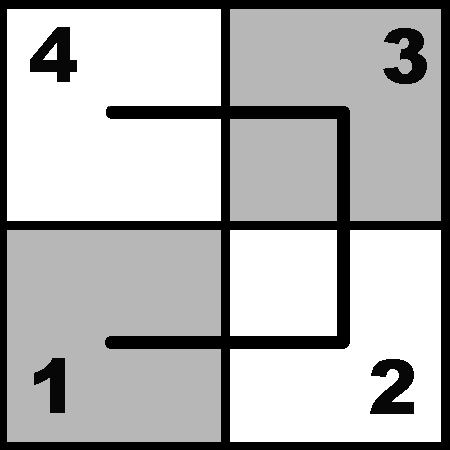
- Becoming
- Influence Character Signpost 1
Buzz enters the picture as he “becomes” Andy’s toy.
- influence Character Journey 1 from Becoming to Conceiving
The fact that Buzz has “become” part of the group has already made quite an impact, however, his impact intensifies as it becomes clear he’s operating on the conception that he’s really a Space Ranger who crash-landed here.
- Conceiving
- Influence Character Signpost 2
Buzz conceives of numerous ways to utilize his “Buzz-y” qualities to gain popularity with the group and solicit their help to repair his ship (most notably during the musical montage).
- Influence Character Journey 2 from Conceiving to Being
Throughout Act 2, Buzz continues trying to Conceive of ways to leave the planet and get on with the business of Being a Space Ranger, until that self-identity comes into doubt.
- Being
- Influence Character Signpost 3
When Buzz sees the toy commercial and discovers he really can’t fly, he suffers a severe identity crisis. That crisis is intensified by Hannah sticking a flowery hat and apron on him and serving him tea. For a time, Buzz doesn’t know who, what, or how to “Be.”
- Influence Character Journey 3 from Being to Conceptualizing
As his identity crisis culminates in a resolve to “Be” Andy’s Toy with all his might, Buzz must then Conceptualize ways to fulfill this new self-identity. His impact also compels Woody to Conceptualize an elaborate plan to save him.
- Conceptualizing
- Influence Character Signpost 4
Buzz uses his wings, this time not to impress, but to bring himself and Woody home. He goes so far as to Conceptualize a flight path past the moving van directly to Andy’s car. (Lucky thing they had a sunroof.)
Relationship Story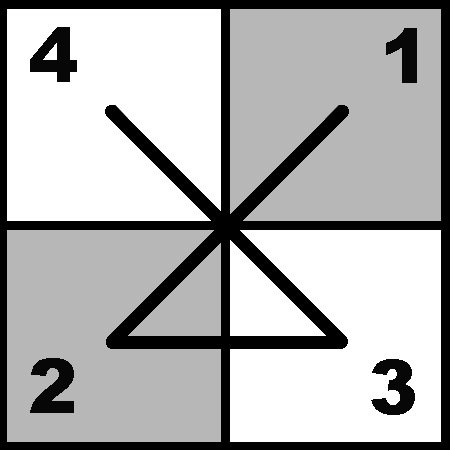
- Preconscious
- Relationship Story Signpost 1
Buzz immediately, reflexively acts like a “real” space ranger, which drives Woody crazy. Woody’s knee-jerk reaction is to negate Buzz, in order to defend his position in the room.
- Relationship Story Journey 1 from Preconscious to SubconsciousBuzz's bravura personality and how much it irritates Woody becomes less of a concern as Woody gets increasingly depressed over his declining popularity.
- Subconscious
- Relationship Story Signpost 2
Because Woody’s whole self-image is based on being Andy’s Favorite Toy, his essential feelings are severely impacted when he finds himself displaced in Andy’s heart. The scene where Woody peeks out of the toy chest and sees Buzz in bed with Andy, and feels very sad about it, essentially marks this act break.
- Relationship Story Journey 2 from Subconscious to Conscious
Woody and Buzz become less concerned over the feelings they have caused in each other and more involved in Conscious considerations. Woody’s anger at Buzz makes him consider finding his way home without him, but then his fear of reprisal from the other toys makes him reconsider. Buzz’s own anger with Woody is displaced with considerations as to how to sneak their way to a spaceship. Gradually Woody is no longer angry at Buzz, but begins to consider himself an also-ran up against Buzz.
- Conscious
- Relationship Story Signpost 3
At Sid’s house, the night before Buzz is scheduled for destruction and when he’s at his lowest emotional point, he has become more “Conscious,” whereupon Woody appeals to his conscious considerations. “...See if you can get this tool box off me… Buzz…I need your help.” “I can’t help. I can’t help anyone.” “Why, sure you can, Buzz. You can get me out of here and then I’ll get that rocket off you, and we’ll make a break for Andy’s house.” “Andy’s house. Sid’s house. What’s the difference.” “Oh, Buzz, you’ve had a big fall. You must not be thinking clearly.” “No, Woody, for the first time I AM thinking clearly… I’m just a toy. A stupid insignificant toy.” “Whoa, hey… Being a toy is a lot better than being a Space Ranger.” “Yeah, right.” “No, it is. Look, over in that house is a kid who thinks you are the greatest, and it’s not because you’re a Space Ranger, pal, it’s because you’re a TOY! You are HIS toy.”
- Relationship Story Journey 3 from Conscious to Memory
Woody and Buzz’s considerations about working together to return to Andy (including considerations of sacrificing themselves to allow the other to escape) allow them to turn negative memories they’ve shared into positive ones. “Hey, Buzz! You’re flying!” “This isn’t flying. This is falling—with style!” “Ha ha! To Infinity and Beyond!!”
- Memory
- Relationship Story Signpost 4
In the closing scene, when the Christmas presents are being opened, Woody says, “Buzz. Buzz Lightyear. You are not worried, are you?” He is invoking the memory of how insecure he and the other toys felt before and upon Buzz’s arrival, and confronting Buzz with the same issue (in a chummy manner).
Plot Progression Visualizations
Dynamic Act Schematics
OS:  MC:
MC:  IC:
IC:  RS:
RS: