Explore the foundations 01 / 05
One story. Four ways in.
A complete story explores an inequity from four distinct Perspectives. Step into each view. Notice how much a single point of view leaves out.
Four Perspectives. One inequity.
These are views of the story, not four characters or four acts. Each reveals conflict the others cannot show on its own.
Choose a Perspective to look closer.
Listen to this chapter
Read the transcript
Think of a story you love. You can watch the whole situation from the outside. You can step inside one person's experience. You can feel another person's way of seeing things challenge that experience. And you can follow the relationship between them as something with a life of its own.
Dramatica calls these the Four Throughlines. The Objective Story asks what everyone is caught up in. The Main Character asks what it is like to be me. The Influence Character asks whether there is another way. The Relationship Story asks what is happening between us.
Four Perspectives on one underlying inequity. Not four characters, and not four acts. Choose one of the Perspectives and notice the kind of conflict it brings into focus.
Introduction to Dramatica
Start with the official recordings
These short introductions give you a clean path into Dramatica Theory before moving into the theory book, classic essays, or platform workflows. Watch them in order, or use each one as a quick reference when a core distinction starts to blur.
Introduction to Dramatica
A first orientation to Dramatica Theory as a model for how plot, character, theme, and meaning work together.
Players and Perspectives
A clear separation between the characters audiences see and the structural Perspectives that carry the meaning of the Storyform.
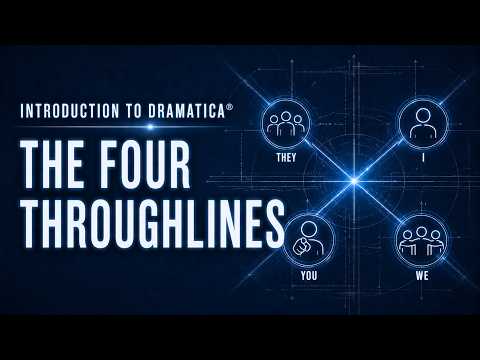
The Four Throughlines
A compact explanation of Objective Story, Main Character, Influence Character, and Relationship Story as four views of one inequity.
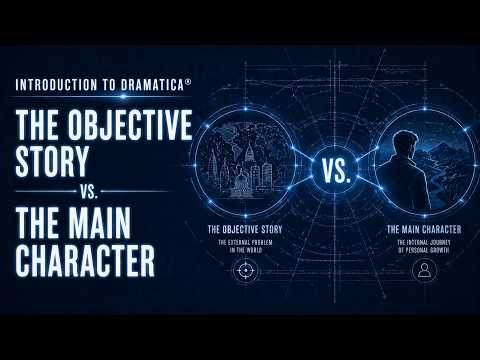
The Objective Story vs. the Main Character
A focused distinction between the external story everyone can observe and the personal point of view that lets the audience experience the conflict from the inside.
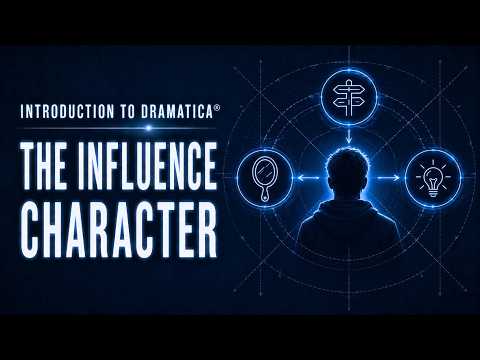
The Influence Character
A focused explanation of the perspective that challenges the Main Character by representing another way of approaching the central inequity.
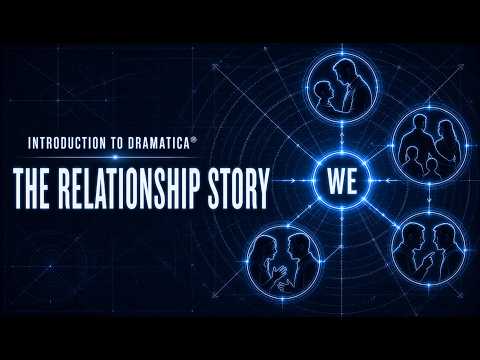
The Relationship Story
A focused explanation of the relationship between Main Character and Influence Character as its own source of conflict and meaning.

The Four Domains
Universe, Physics, Mind, and Psychology describe the four broad areas where conflict can arise in a complete story.
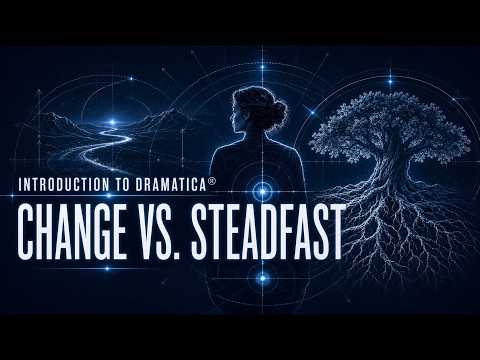
Change vs. Steadfast
Main Character Resolve describes whether the Main Character abandons their central approach or remains Steadfast as the story tests it.
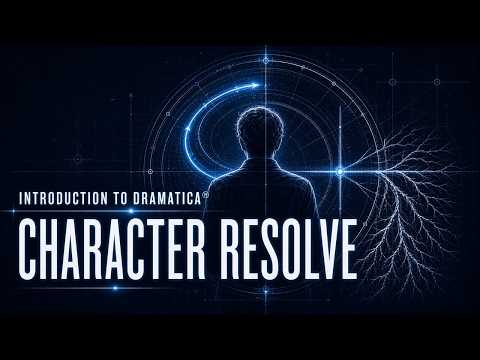
Character Resolve
Explore how Main Character and Influence Character Resolve shape the personal argument, distinct from Objective Story Outcome.
Why writers use it
Dramatica is for clarity, not decoration
It is most useful when you need to understand what a story is really doing, where it is drifting, and how to keep revisions tied to one structural spine instead of a pile of good intentions.
Find the underlying argument
Use Dramatica when a draft has energy but you still cannot clearly explain what the story is actually arguing or why the ending does not land.
Diagnose missing pressure
If a story feels thin, Dramatica helps you see whether a Throughline is missing, blurred, or carrying the wrong kind of conflict.
Keep revisions coherent
When notes and rewrites start pulling the story in different directions, Dramatica gives you a way to test whether the structure still belongs to the same Storyform.
Compared to other paradigms
Dramatica tries to model the deeper structure beneath the familiar patterns
- Dramatica separates Main Character from Protagonist instead of assuming they are always the same role.
- It treats Change and Steadfast as equally valid forms of Resolve.
- It identifies four Throughlines instead of collapsing everything into one heroic arc.
- It distinguishes Storyform from Storytelling, which makes structural drift easier to diagnose.
Classic applications
See the theory applied, not just described
The archives show Dramatica in practice: comparison essays, constructive criticism, and early writing that applies the model directly to real stories.
In the platform
Theory becomes usable when it turns into decisions
Storyform Builder helps you make structural choices, and Subtxt helps turn that structure into dramatic development.