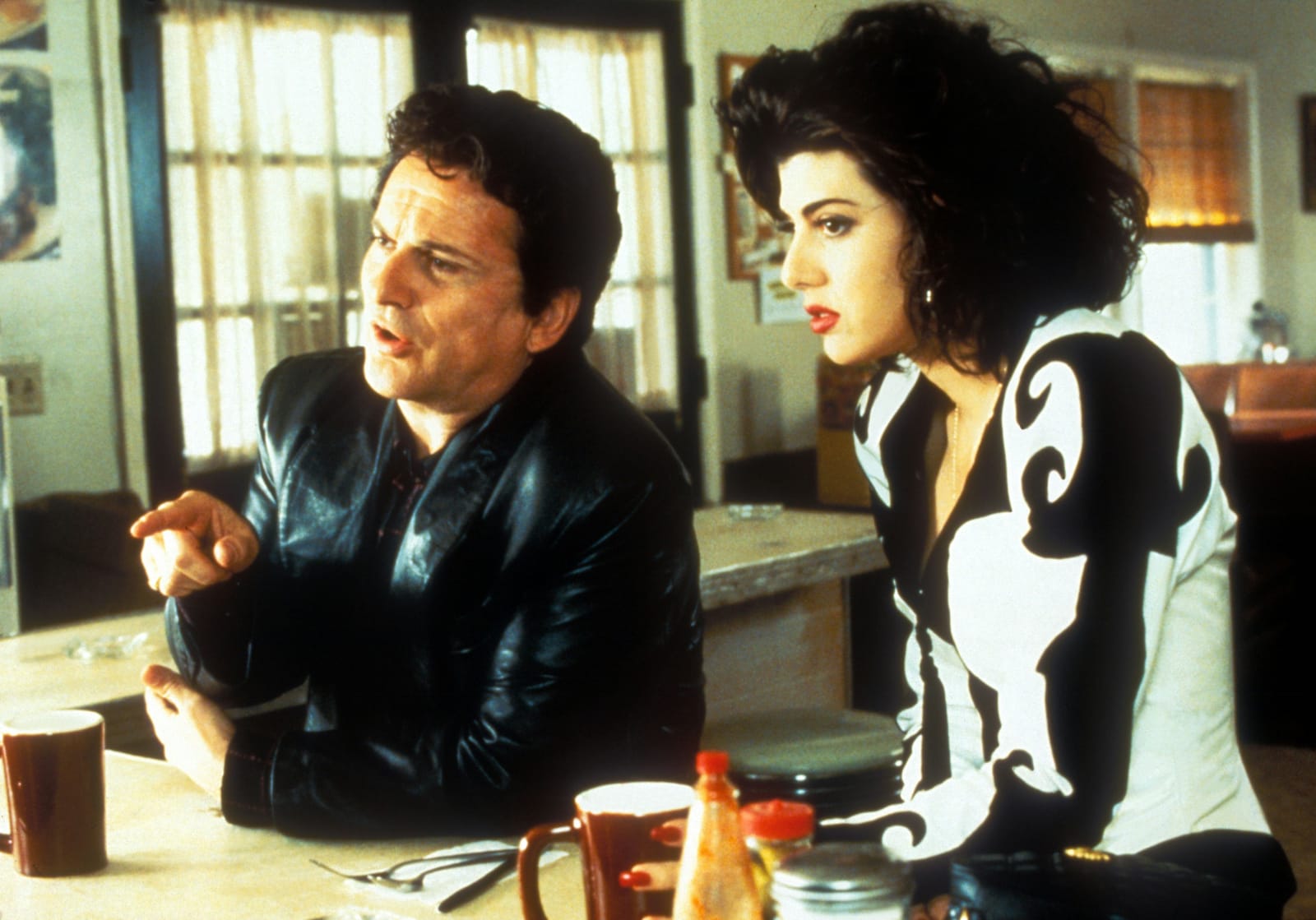
Does My Cousin Vinny turn on getting the facts right or accepting help? We compare the competing interpretations across all Four Throughlines, examine every Signpost, and explain the narrow case for Control/Uncontrolled.
Audience Connection, Story Conflict, and Story Ending reveal how a Storyform shapes the audience’s experience. Six examples show how those structural choices create different kinds of connection, pressure, and loss.
Fight Club's canonical film Storyform ends in Failure and Good: the Objective Story Problem persists while the Narrator resolves his personal Problem. The novel preserves that distinction with different events. The Chinese ending preserves the failed concept while making the Objective Story Solution effective. That combination contradicts the Failure Storyform: it retains the failed Goal while supplying the resolution that belongs to Success. Neither the novel nor the original film makes that contradictory move.
Dramatica MCP lets outside agents retrieve theory, examples, Stories, Storyforms, and supported saved components. Narrova is the theory-grounded development environment for testing what a story means, finding a defensible Storyform, and carrying those decisions into the Story Development Ledger and Subtxt.
The act of writing reveals thought. AI-generated prose can hide ambiguity behind fluency. Dramatica’s pro-AI position keeps the author responsible for Storytelling while using AI to make a Storyform, its Throughlines, and its unresolved questions easier to see.
A Storyform is Dramatica’s model of the argument beneath a story. By comparing what happens to everyone, what the central character experiences personally, the viewpoint challenging them, and the relationship changing between them, Narrova can test competing readings and show a writer exactly where a draft has not yet made up its mind.
CraftAlign shows why AI revision improves when it operates on named story features instead of vague taste. Dramatica makes a story’s underlying argument explicit, while NCP lets that structural context travel between writers, agents, and tools.
Serious story AI should preserve the writer's encounter with meaning. Dramatica gives writers a structural language for what they discover while drafting, revising, and arguing with the work; it doesn't turn Storyform into a substitute for storytelling.
The two biggest films of summer 2026 look nothing alike, yet their canonical Storyforms share the same Influence Character and Relationship Story Problems. That structural rhyme tells us something about what audiences are searching for now.
The danger of generative AI is not possibility itself. It is receiving polished answers without understanding the narrative argument carried by each one. Dramatica and Narrova can turn abundance into a meaningful creative journey by revealing structural consequences while leaving authorship with the writer.

Recognizing how a story moves us does not cancel the experience. Christopher Nolan’s comments on storytelling, Memento, and The Odyssey reveal the practical distinction between a Storyform and the storytelling built from it.
AI can weaken thinking when it enters before the writer has formed a question, but the real issue is not the tool. It is the workflow. Serious writers think first, prompt second, and keep authority over meaning.
Calling a movie AI-like because it feels formulaic mistakes surface familiarity for structural failure. Formula repeats recognizable moves. A Storyform gives those moves meaning. The difference matters even more when prestige television and blockbuster craft are used as proof of storytelling strength.

Modern studios will need to treat AI story systems less like novelty assistants and more like accountable creative staff. The serious advantage will come from giving those systems defined roles, bounded authority, observable reasoning, and a structural method for protecting the Storyform while human writers make the creative decisions.
A look at how Influence Character pressure can hand off across characters while the Perspective stays coherent.
A writer using Dramatica to clarify structure has not surrendered authorship. The platform can ask better questions, reveal pressure, and help the writer see the Storyform more clearly. The creative decisions, pages, and artistic vision still belong to the writer.
StoryScope matters because it moves the AI-writing conversation from punctuation to narrative construction. The paper finds that AI fiction over-explains theme, favors cleaner causal lines, clusters in a narrower narrative space, and resists style-only disguise. For writers, the lesson is direct: the durable human advantage is not surface voice. It is knowing what the story is arguing before the prose begins.
Equity and Inequity are not just fairness and unfairness. As Pivotal Elements, they reveal two different ways a story can locate imbalance.
Ashlee Vance's complaint that AI writing still feels soulless matters because it points past style and toward meaning. Sam Altman's answer is personalization, but for writers personalization has to reach deeper than preference. It has to understand Storyform, Perspective, and the pressure that makes a sentence belong.
Want to translate “Want vs. Need” into Dramatica terms without losing the simplicity of the original question? This quick Q&A keeps the shorthand, but maps it to the Storypoints Dramatica actually uses.
The easiest way to misread the new WGA deal is to make AI the whole story. The bigger movement is health care, residuals, minimums, and labor protections. For Dramatica, the more important point is the one the broader debate still keeps missing: Storyform and storytelling are not the same thing, and authorship still lives in expression.
The shortcut critique of AI assumes serious writers want fewer decisions. In practice, the opposite is usually true. Used creatively, AI multiplies the number of avenues a writer can explore, which makes authorship more demanding, not less. The real question is whether the writer keeps authority over meaning, structure, and selection.
The loudest anti-AI arguments often try to turn every creative threat into theft. But piracy, copyright infringement, identity confusion, style imitation, and market competition are not the same claim. Once those terms are separated, the real grievance in this debate looks much less like stolen property and much more like the loss of a market advantage.
J. Michael Straczynski is right that current AI systems do not possess the interior drive of an author. The useful question is what changes when a writer brings the curiosity, judgment, and Storyform pressure to the machine.
The fear around AI assumes software exists mainly to optimize labor away. In creative work, the deeper change is different: AI widens the field of possibility, lowers old barriers to entry, and gives more people the power to explore, select, and shape meaning without surrendering authorship.
The real problem is not that AI has entered story development. It is that too many people collapse every AI system into the same shallow automation story. Generic coverage bots, ranking engines, and a Dramatica-grounded narrative verifier are not doing the same job, and confusing them obscures where the real risks actually are.
Hannah Einbinder is reacting to a real threat, but “AI artists are losers” misdiagnoses the conflict. In Dramatica terms, AI art is the subject matter; the deeper source of conflict is an industry using new tools to separate output from authorship, speed from risk, and product from the people who make meaning.
AI can help writers when it sharpens judgment instead of impersonating it. Narrova matters because Dramatica gives the machine a disciplined role: illuminate conflict, perspective, direction, and consequence while the writer keeps authority over meaning.
Studio of Tomorrow still feels prophetic because it targets the managerial fantasy that story can be reduced to throughput. The satire lands even harder in the AI era, but it also stops one step short: the problem is not systemization itself. The problem is formalizing the wrong layer. Narrova matters because it tries to keep authorial intent legible instead of replacing it with output.
The Secret Agent can be beautifully made, politically resonant, and critically adored while still remaining unclear from a Dramatica point of view. The difference is theme. Critics often mean subject matter, atmosphere, and implication. Dramatica means contextualized meaning across the Objective Story, Main Character, Influence Character, and Relationship Story Throughlines.
Xiaoyin Qu is right that comparing human intelligence to AI starts to look like flexing muscle in front of a tractor. From a Dramatica perspective, that does not make intelligence irrelevant. It changes where value lives. As Ability, Thought, and Knowledge become easier to externalize, Desire starts looking less like a soft trait and more like the force that gives human authorship direction.
Edward Saatchi's provocation matters because it shifts the AI conversation from tooling to competition. If machines keep collapsing the cost of execution, then surface competence stops being the advantage. The durable moat becomes meaning: the ability to build a coherent Storyform, sustain Perspective, and remain accountable for what a story is actually saying.
Kathleen Kennedy is right to keep circling taste. In storytelling, the problem is not merely whether AI can generate content. The problem is that story only becomes meaningful when someone chooses what matters, what hurts, what stays hidden, and what earns expression. Dramatica can sharpen structural reasoning, but it does not replace the human judgment that makes a Storyform worth telling.
Moral-dilemma stories only come alive when the pressure is real. If one side is obviously right and the other obviously monstrous, there may be pain, but there is no real dramatic bind. The story starts working when both values matter, both losses are human, and the character's attempt to protect one person or principle begins causing irreversible harm somewhere else.
Ordinary inference does not turn your one-off prompt into someone else’s future answer. The real risks live in data retention, retrieval architecture, training policy, and memorization failures. Creators need sharper governance questions, not blurrier metaphors.
Quilty and Dramatica may both sit on top of modern AI, but they are aiming at different targets. One compresses a script into an investment signal. The other tries to make Storyform logic, Throughlines, and structural tradeoffs visible enough to argue with. That difference changes who stays in control.
The real question is not whether AI touches writing at all. It is whether the writer keeps authority over meaning, judgment, and Storyform. Dramatica matters because it offers the structural discipline needed to use AI without surrendering authorship.
A social-issue story starts working when the issue stops being a debate topic and starts costing someone something personal.
A Dramatica analysis of why Marty Supreme nearly lands its argument, then blurs its ending by splitting its Influence Character pressure and protecting Marty from the full cost of his narcissism.
Useful AI offloads friction like retrieval, transcription, and cleanup. Harmful AI outsourcing hands over interpretation, structure, and authorship. Narrova matters because it is designed to protect Storyform integrity instead of replacing the writer’s thinking.
Recent AI narrative-reasoning research keeps inventing tougher tests for beliefs, goals, causality, and perspective across time. What those benchmarks keep exposing is how much story depends on an explicit structural model, which is exactly where Dramatica has been working since 1994.
Multi-agent fiction loops can manufacture a novel-shaped product, but without explicit structural state across the Objective Story, Main Character, Influence Character, and Relationship Story Throughlines, meaning stays accidental and evaluation stays cosmetic.
A Dramatica reading of Hoppers that shows how one choice, Mabel as a Steadfast Main Character, causes the rest of the Storyform to fall into place and reveals the film's deeper argument: remain true to a reactive moral conscience, and both the larger effort and the personal life can end well.
A Dramatica reading of Bugonia that starts with Perception and Actuality and shows how the rest of the Storyform falls into place not by formula, but by relationship.
A Dramatica reading of One Battle After Another: why the film’s political sprawl, tonal weirdness, and rescue-thriller surface resolve into something unexpectedly elegant once you see the Objective Story, Main Character, Influence Character, and Relationship Story working together.
AI is getting very good at the frontend of writing, but story still depends on a backend of narrative structure that has to be chosen, held, and verified.
Why Netflix’s War Machine can feel mechanically coherent yet dramatically hollow: the film generates momentum, but it never clarifies the Storymind argument that would make its ideas about leadership and sacrifice actually mean something.
Why Dramatica now presents both Plot-focused and Character-focused terminology, and how Train Dreams makes the need for that shift unmistakable.
Generic LLM assumptions collapse key Dramatica distinctions, so our evaluation and fine-tuning process enforces structural alignment to expand storytelling possibilities.
Dramatica treats story meaning as a Storyform specification, then verifies whether drafts actually express that intent.
The real tradeoff is not creativity versus optimization; it is blind exploration versus instrumented exploration.
Dramatica does not prescribe surface pattern. It verifies structural intent while leaving expression open.
Dramatica can verify narrative intent across genres because it checks structural coherence, not stylistic sameness.
A Dramatica lens on objective roles, and why sympathy is the wrong yardstick.
Protagonist drives the Objective Story effort; Main Character anchors audience perspective. Ferris Bueller is a clean Hero blend.
The EMNLP 2025 survey shows why text-only metrics fall short—and how Dramatica, Subtxt, Narrova, and the Narrative Context Protocol deliver the narrative intelligence serious story work needs.
AI play is exploding; Dramatica gives it structure so Storyforming → Story Encoding → Storyweaving → Story Reception hits the finish line.
Daniel Jeffries’ optimism meets the Dramatica platform—showing how Narrova keeps long-form structure coherent while teams explore more ideas with less friction.
Why Hollywood’s next wave depends on pairing Dramatica structure and Narrova’s agents to keep authorship human, cohesive, and production-ready.
A deep dive into why episodic coherence eludes generic AI setups and how the Dramatica Storyform solves long-arc narrative drift.
A call to savor the process—using Dramatica and Narrova to transform quick wins into rich, intentional storytelling.