Find your way into the story.
Move through Inspiration, Development, Exposition, and Storytelling. Thoughtful writing activities help you discover what comes next, one step at a time.
Different ways to think, explore, and write.
One story, wherever inspiration takes you.
Story Guide
Start with a character, a question, or a scene you can’t stop thinking about. Give your ideas somewhere to grow.

Move through Inspiration, Development, Exposition, and Storytelling. Thoughtful writing activities help you discover what comes next, one step at a time.
Develop questions and answers, connect your ideas, and weave the material you choose into a synopsis and treatment. Your notes and manuscript stay close by.
Story Expert
Explore the decisions at the heart of your story, with guidance drawn from the original Dramatica application.

Will your Main Character Change or remain Steadfast? Work through the questions with definitions and examples, then choose the possibilities that fit your story.
Three levels of detail let you begin with the essentials or explore every Throughline. Keep your Storytelling and notes beside the choices that shape your Storyform.
Narrova
A conversation with narrative intelligence, grounded in Dramatica Theory and the story you’re developing.

Set your Story Context, attach the material you want to explore, and ask a focused question. Compare possibilities, investigate a contradiction, or work through a difficult scene.
Save a useful response in Notes, select a snippet to explore further, or branch the conversation to try another direction. You decide what belongs in the story.
Build Characters
Look beneath a character’s biography. Explore the motivations and dramatic roles that put your cast in motion.

Bring your cast into the story’s structure. Develop the people who carry its conflict, and connect their dramatic characteristics to the characters you imagine.
Work with Motivations, Methodologies, Purposes, and Evaluations. Discover how different ways of pursuing, acting, and judging can make your cast more distinct.
Subtxt
Bring your Storyform to life in the details: the confrontations, discoveries, and decisions your audience will experience.
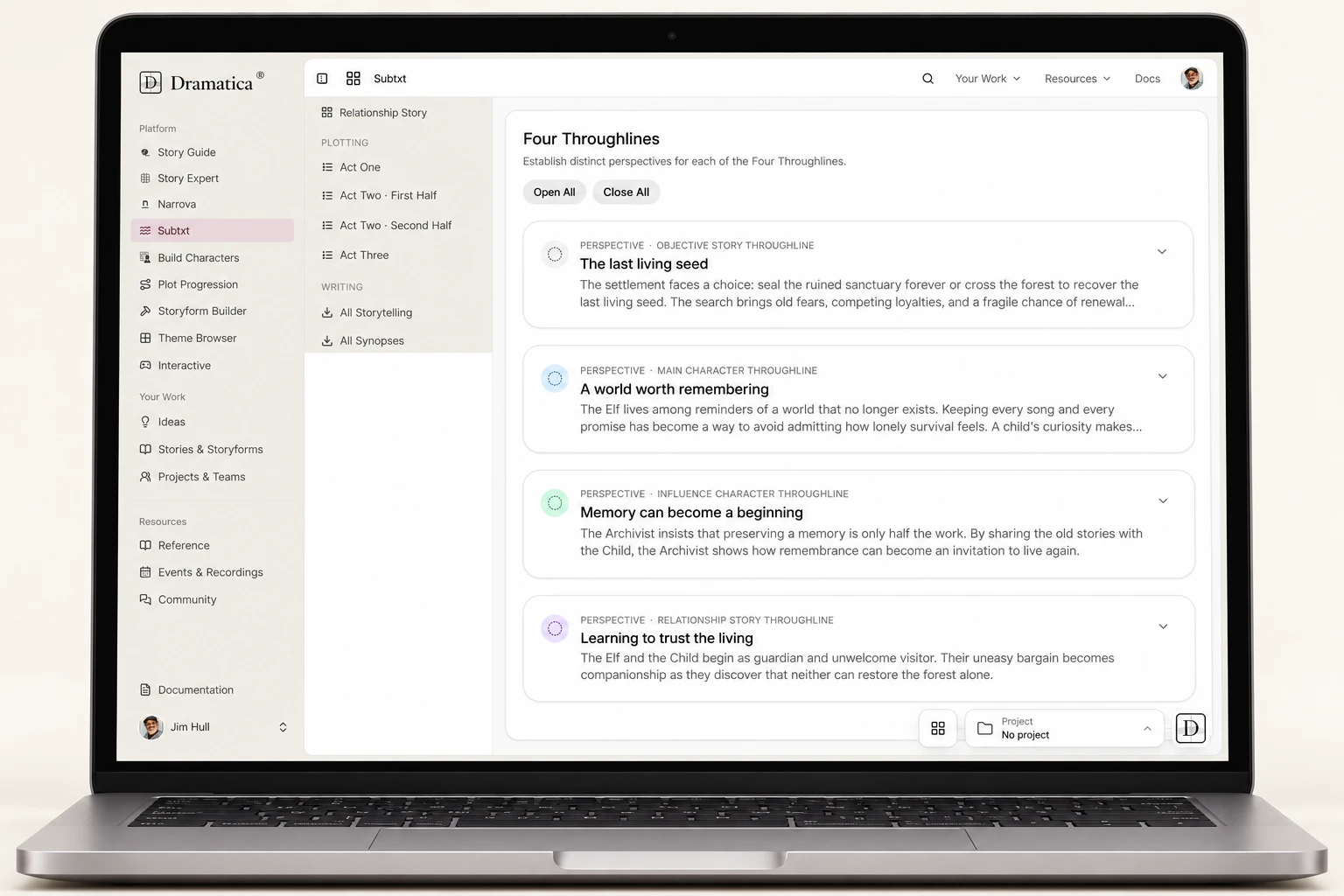
Move through Forming, Illustrating, Plotting, and Writing. Translate Storypoints into specific Storytelling that belongs to your characters and their world.
Arrange Storybeats into Moments—your scenes, sequences, or chapters. Bring different Throughlines together, then review and export the writing material you’ve developed.
Plot Progression
Follow your story across all four Throughlines. Move from the big picture into the Storybeats that bring each turn to life.
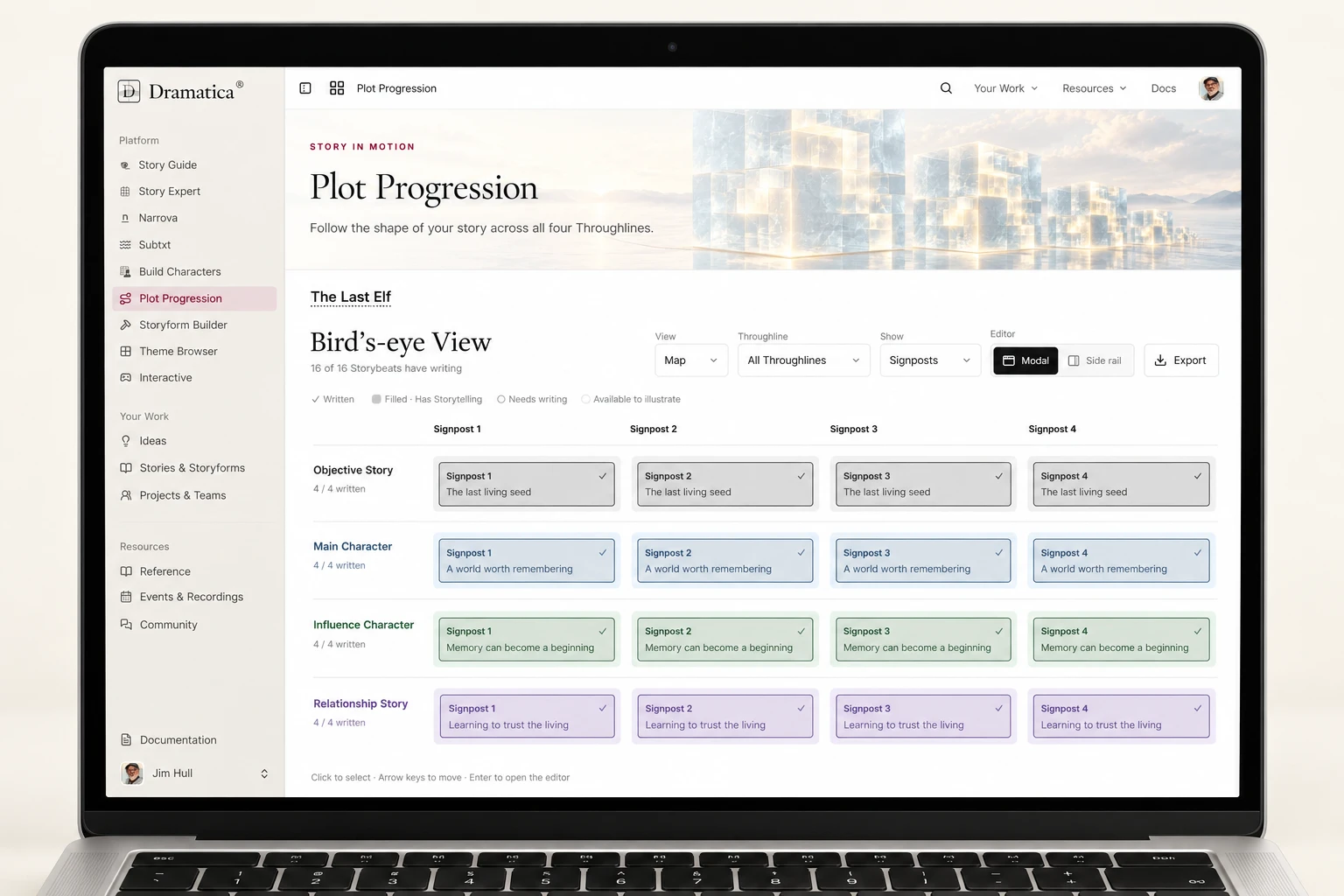
Explore each Throughline side by side. Move between Signposts, Progressions, and Events, then focus on the next Storybeat you want to develop.
Open a Storybeat to develop its Storytelling, explore examples, and work through the details. Return to the wider view with each piece connected to the story’s structure.
Storyform Builder
For the moments when you want to work directly with structure, all the choices are within reach.

Explore Domains, Storypoints, and Signposts. Watch the compatible possibilities narrow as you make decisions about the story you want to tell.
Distinguish the choices you made from the ones the Storyform infers. Continue from Story Expert, or begin here when you prefer a direct view of the structure.
Interactive
Experience your Story Moments as live scenes, and explore what happens when your characters have to act.
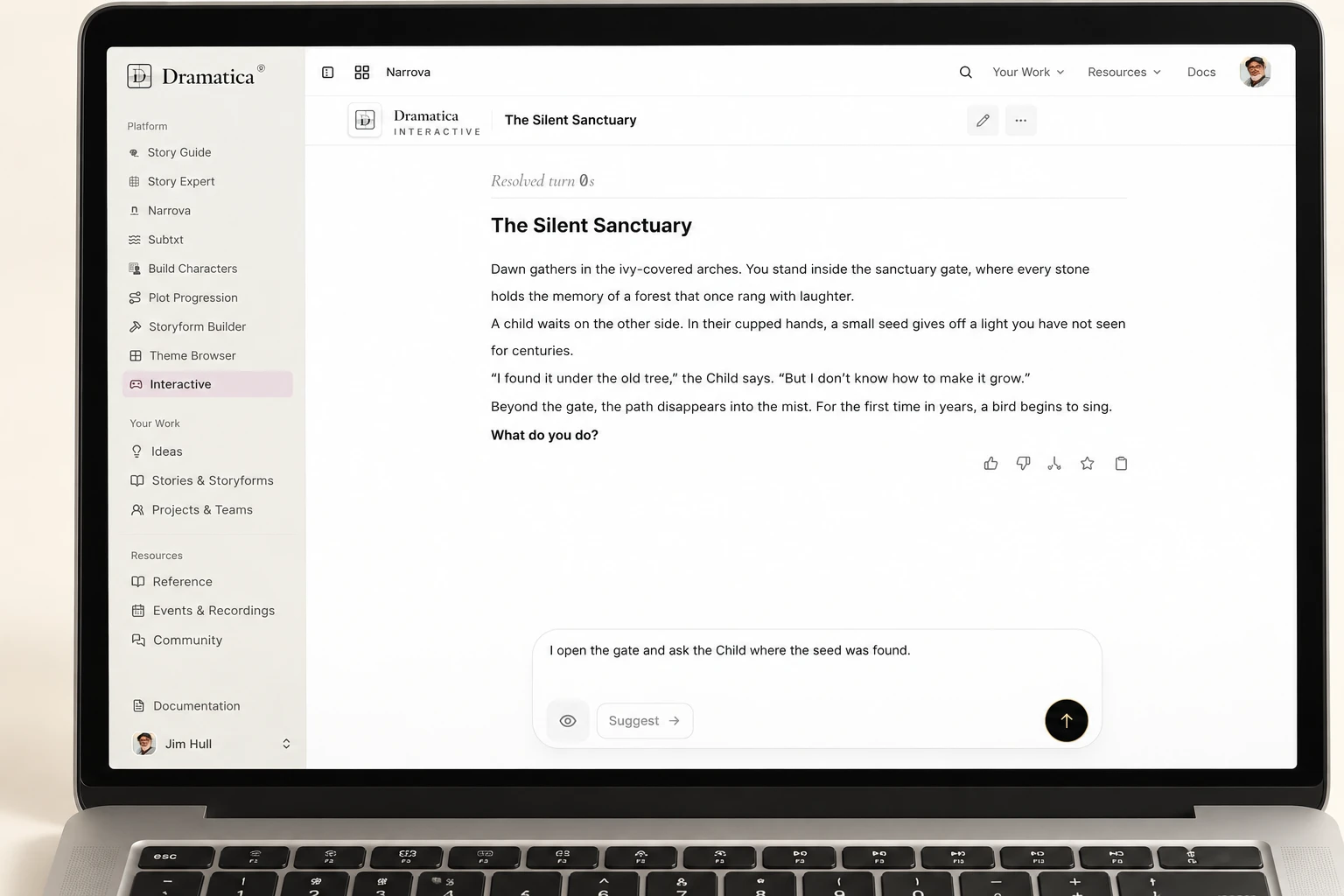
Develop a Moment and its Storybeats in Subtxt, then launch it in Interactive. Explore the scene through a live playthrough grounded in your story material.
Pressure-test Character choices, Throughlines, and Storybeats from inside the scene. Return to your writing with a clearer sense of how the conflict plays.
Choose the workspace that fits your next idea.
Your Story Context keeps the work connected.